
More people working in India's technology industry have lost their jobs in the first six months of 2023 than in the corresponding period in 2022.

Cement companies witnessed speculative support from investors through FY23 amid hopes of a rebound. After capex announcements in the FY24 Budget, there was further interest due to expectations that government expenditure would boost earnings, besides a generic macro-recovery. Cement earnings were under pressure in FY22 and FY23 due to high raw material and fuel costs; muted demand prevented them passing on the higher cost.

A sum of Rs 7060 crore is provided in the current fiscal for the project of developing one hundred Smart Cities.

Among the Sensex firms, Bajaj Finance emerged as the biggest gainer by climbing 2.95 per cent. Tata Motors, Bajaj Finserv, IndusInd Bank, Sun Pharma, Mahindra & Mahindra, State Bank of India, Larsen & Toubro, HDFC, HDFC Bank, Maruti, Reliance Industries and Bharti Airtel were the other major winners. HCL Technologies, Axis Bank, ICICI Bank, Tech Mahindra and Titan were among the laggards.

Wholesale price inflation remained in the negative territory for the fourth month in a row in July at (-)1.36 per cent, even though prices of food items, especially vegetables, skyrocketed. The inflation, however, has inched up from (-)4.12 per cent recorded in June fuelled by 62.12 per cent rise in vegetable prices. In July last year, wholesale price index (WPI) was 14.07 per cent.

Shares of real estate firms have been outperforming over the past year. The rally, analysts say, may hit roadblocks in the near term amid stretched valuations, even as the long-term prospects for the sector remain ebullient. "Most of the positive news flow is already in the price. Hence, investors sitting on hefty profits may partially cash out at current levels," suggests V K Vijayakumar, chief investment strategist at Geojit Financial Services.

The overall market breadth was positive as 1,896 stocks advanced against 902 declining ones, on the BSE.

Automotive (auto) and auto ancillary stocks have been in the fast lane thus far in 2023-24 (FY24), with the National Stock Exchange Nifty Auto Index surging nearly 27 per cent, outperforming the Nifty50, which has gained roughly 11 per cent during this period. The top-gear performance of auto stocks at the bourses, according to A K Prabhakar, head of research at IDBI Capital, has been triggered by the premiumisation of products across vehicle manufacturers, which has seen vehicle sales remaining relatively stable. "It is not about higher sales figures now, but about premiumisation.

Stocks of small- and mid-cap companies continued to gain ground in July, notwithstanding analysts sounding caution on these two market segments given the sharp run thus far in calendar year 2023 (CY23). Sanjeev Prasad, co-head of Kotak Institutional Equities, in a note co-authored with Anindya Bhowmik and Sunita Baldawa in June-end, had cautioned against the sharp run in small- and mid-caps. "We do not see any particular reason for the excitement in small- and mid-cap stocks.

The third-quarter financials didn't excite market watchers. But equity investors can still make money if they invest in the right stocks.

India has also become the fourth best represented nation in the 2024 rankings, up from sixth last year.

Private equity and venture capital funds' investment in the country continued to fall in May, with the overall values declining by nearly 44 per cent to $3.5 billion, a report said on Monday. The dedicated funds had invested $6.2 billion in May 2022 and $7.4 billion in the preceding month of April 2023, representing a dip of 44 per cent and 52 per cent, respectively, as per the report by industry lobby IVCA and consultancy firm EY. "Despite a recovery of sorts being seen in tech sector indices and some of the large global tech names, sentiment in India for tech sector investments has been lacklustre, and fundraising by Indian startups has been sluggish," the firm's partner Vivek Soni said.

Commodity investments can help you diversify your portfolio in asset classes other than equity and debt, says Dwaipayan Bose.

The headline for corporate profit growth has been very encouraging in the July-September quarter (Q2) of 2023-24 (FY24), with the combined net profit of listed companies up by 38 per cent year-on-year. However, the earnings distribution has been very lopsided, with most of the growth coming from public-sector oil-marketing companies (OMCs), banks, non-bank lenders, automobile (auto) companies, and cement producers. By comparison, companies from information technology services, fast-moving consumer goods (FMCG), retail, and consumer durables were disappointed, experiencing a sharp slowdown in net sales growth and a relatively muted increase in reported net profit.

Worried by a spike in Chinese imports, the Indian Steel Association (ISA) plans to take up the matter with the government and seek measures to fix "trade distortions". Alok Sahay, secretary general of the group that represents the country's steel producers, said systemic changes were needed. "In order to take any trade measure, it takes a minimum of 15 months' time, due to prevalence of lesser duty rule in India, making India an easy target. "We are going to write to the government on this," he said.

Sustained growth only if domestic manufacturing rises

The partially convertible rupee closed at 61.31/32 per dollar, unchanged from its Tuesday close.

Indian equity markets had a good run in the first half of calendar year 2023 (CY23), with the S&P BSE Sensex and the National Stock Exchange Nifty50 hitting fresh 52-week highs. While the Sensex scaled up to a peak 64,718, the Nifty50 hit Mt 19,189. As the markets now prepare to enter the second half (H2) of CY23, all eyes are on global central banks, especially the US Federal Reserve, as to when they will pause and pivot as regards their interest-rate cycle.

These core industries comprise 40.27 per cent of the weight of items included in the Index of Industrial Production.

Despite the best ever quarterly net profit of Rs 3,091 crore during April-June of financial year 2023-24 (Q1FY24), challenges are mounting for InterGlobe Aviation-run IndiGo in the near term, said analysts. Given this, most brokerages have retained their ratings from 'buy to underperform', as well as their target price for the stock. For instance, Motilal Oswal Financial Services has retained its 'neutral' rating on the scrip as it believes the low-cost airline is facing teething issues at present.

From the Sensex pack, Larsen & Toubro jumped 4.26 per cent to emerge as the biggest gainer, followed by IndusInd Bank, Tech Mahindra, State Bank of India, HCL Technologies, Power Grid, NTPC, Axis Bank, Kotak Mahindra Bank, HDFC Bank and Wipro. Mahindra & Mahindra, Infosys, UltraTech Cement and Hindustan Unilever were the major laggards.

Amid cooling raw material prices, the crude-oil linked companies, which includes paint and tyre firms, have been on a roll over the past one year. Shares of related companies have gained up to 84 per cent, as against a 14 per cent rise in the S&P BSE Sensex. Analysts, however, believe stretched valuations in both these sectors could trigger a de-rating.

Auto sector has nothing to look forward to in the Budget.

Services companies continued to raise prices, though the rate of change was the weakest since April

In a memorable year for the equity market, Dalal Street investors added a whopping Rs 81.90 lakh crore to their wealth in 2023 as a raft of positive factors powered a stellar rally in stocks. Experts said India's strong macroeconomic fundamentals, political stability owing to the BJP's success in recent elections in three significant states, optimistic corporate earnings outlook, signals from the US Federal Reserve about three prospective rate cuts next year and heavy retail investors participation played a major role in fuelling the stock market rally in 2023. In the year 2023, the 30-share BSE Sensex jumped 11,399.52 points or 18.73 per cent.

The six-member monetary policy committee voted 5:1 for the decision, with only Ravindra Dholakia voting for a 0.25 per cent reduction in rates.

'In FY23, PV sales are expected to end the year at a record 3.8 million units, up 26 per cent. In FY24, however, the industry is expecting 5-7 per cent volume growth'

As many as 267 of 453 companies from the BSE500 index are trading above their consensus price targets, according to the data compiled by Bloomberg. Not all companies in the BSE500 index are tracked by analysts.

Refining major optimistic on planned investment of $16 bn for expansion and new technology to post healthy margins

'India is the sixth-largest market for the Kia Corporation, and contributes 8 to 9 per cent to our global sales.' 'We are eyeing 10 per cent market share over the next few years depending on customer demand and new product innovations.'

Asian Development Bank (ADB) has kept its outlook for India's economic growth unchanged at 7 per cent for the current fiscal year while forecasting a weaker-than-previously expected pace for developing Asia. ADB's 7 per cent growth projection for fiscal 2022-23 (April 2022 to March 2023), unchanged from its September forecast, compares to 8.7 per cent GDP growth in 2021-22. For 2023-24, the GDP growth has been kept unchanged at 7.2 per cent.

For long-term financial security, millennials must not only provide social security for their young families but also ensure that their financial burdens are not passed down to their families, says Casparus Kromhout.

'The market should maintain optimism on the back of range-bound oil prices, a robust fiscal balance sheet, a better-than-expected monsoon, and moderating inflation.'

AI and machine learning will only continue to grow in 2022, with a significant increase in the demand for such roles, notes Sekhar Garisa, CEO, Monster.com.

'The number of first-time investors into MFs can grow four times more than the current rate if we are able to accept the bank KYCs.'
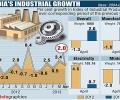
Vivek Mahajan (Head - Research) Aditya Birla Money, analysed the slow IIP growth.

UPL, the country's largest agrochemical company, had a weak July-September quarter (Q2), reporting a sharp fall in revenues across geographies. Overall, the revenues were down 19 per cent on the back of lower agrochemical prices and inventory destocking. While the overall volumes were down 7 per cent, prices fell by 15 per cent. Volume decline in the European market was on the back of high channel inventory and product bans while in India the fall by 27 per cent was on account of muted demand for segments such as cotton and pulses.

'We aim at establishing India as an early talent hub on a global scale and are actively recruiting professionals in areas like cybersecurity, machine learning, data science, and other relevant fields.'

The contraction in November this year is the second biggest fall in the current financial year.

Nifty50's earnings growth, estimated at 20 per cent by global research and brokerage firm Jefferies for financial year 2023-24 (FY24), will be amongst the top three in the Asian region, and is likely to outperform peers. Asean 40 index with 29.1 per cent estimated earnings growth and Straits Times Index (STI) with 29.1 per cent estimated earnings growth are the only two other indices in the Asian region that are likely to outperform India, suggests the recent Jefferies report, coauthored by Mahesh Nandurkar, their managing director along with Abhinav Sinha and Nishant Poddar.
